

Let’s face it from tree’s perspective; pruning a healthy tree is always stressful; leaving tree with scars, reducing food factory production, and creating a hormonal imbalance. Changing and reducing a tree’s internal hormonal flows ( growth hormones are auxin\’s in apical buds and cytokinin in root buds) will create “wreck” to its hormonal balances. As results of these hormonal imbalances, the tree is adapting to survival mood and starts producing new growth ( twigs, water sprouts or suckers) just to get necessary food sources for survival.
What are the reasons to prune from a tree’s perspective ?
Trees have a remarkable ability to store energy produced during the growing season to support their survival through the winter months. During this time, trees accumulate carbohydrates generated through photosynthesis and store them in their roots, trunk, and branches. In spring, this stored energy is mobilized to support new growth, including the development of leaves, flowers, and twigs.
Pruning reduces the number of leaves—the tree’s primary “food factories.” As a result, the remaining branches have greater access to available water and nutrients, which can improve their growth and overall vigor. However, maintaining a healthy root system is just as critical as preserving the tree’s foliage. A strong and healthy root system—supported by uncompacted soil, minimal root disturbance, proper watering, and the use of mulch—ensures that the above-ground portion of the tree receives adequate water and nutrients needed for growth, recovery, and resilience.
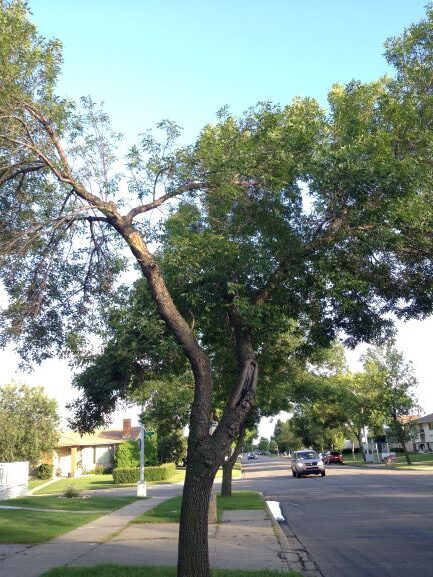
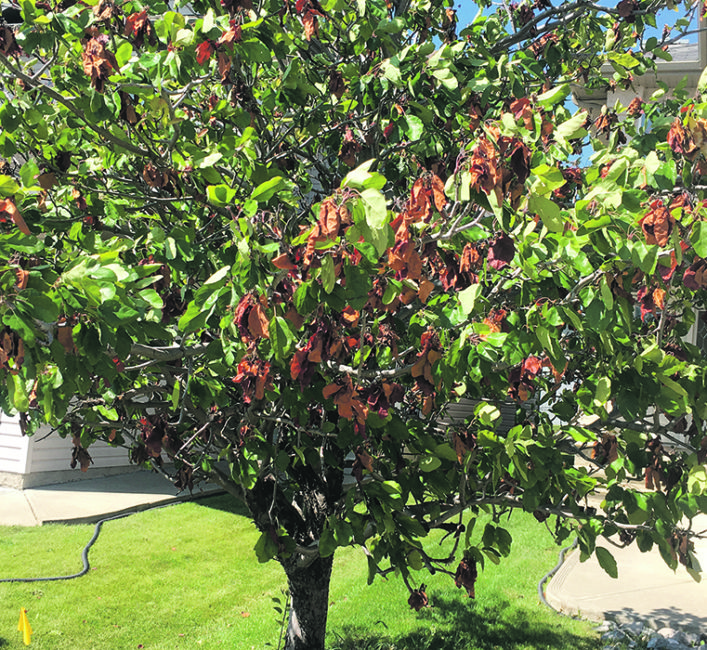
There are situations where pruning is highly beneficial from a tree health perspective. Removing dead, diseased, and damaged (often referred to as the “3D”) branches helps prevent the spread of decay and allows the tree to direct its energy toward healthy tissues. In this way, pruning can support the tree’s natural recovery processes.
Trees also perform a form of natural pruning each year. Small branches or twigs that receive little or no sunlight gradually decline, die, and eventually fall from the tree. This natural process allows the tree to concentrate its resources on the most productive and well-lit parts of its canopy.
What are the reasons to prune trees from human perspective?
From a human perspective, the primary objective of pruning aligns closely with the tree’s natural processes: removing dead, diseased, and damaged parts that may negatively affect the tree’s overall health and survival. Beyond this, there are several additional reasons why pruning is an important tree management practice.
Safety – Trees are often located in areas where people live, work, and recreate. Because of this, there is always a possibility that a tree—or part of it—may fail and become hazardous to people, property, or nearby infrastructure. Pruning helps reduce these risks by removing weak, damaged, or structurally unstable branches.
Maintaining overall tree health – Proper pruning can reduce stress caused by insects, diseases, and environmental factors. Removing infected or infested branches can help prevent the spread of pests or disease to other parts of the tree and surrounding vegetation. Pruning can also improve air circulation within the canopy, which helps reduce conditions favorable for certain plant diseases and encourages healthier growth.
Increasing flowering and fruit production – Strategic pruning can stimulate new growth and improve the quantity and quality of flowers and fruit. By directing the tree’s energy to productive branches, pruning can enhance overall yield.
Training young trees – Early pruning is important for developing a strong and well-balanced tree structure. Training young trees helps establish a stable framework of branches, reducing the likelihood of structural problems as the tree matures.
Improving aesthetics – Some pruning practices are performed primarily for visual appeal. Shaping or thinning the canopy can enhance the appearance of trees in landscapes, parks, and residential areas. While aesthetic pruning may not directly benefit the tree biologically, it contributes to the visual quality of the landscape.
Root pruning – In some cases, root pruning is performed on young trees before planting to prevent “root circling,” a condition where roots grow around the inside of containers. Correcting this issue helps promote healthier root development and better long-term stability once the tree is planted.
It is important to remember that pruning must always be performed correctly. Improper pruning techniques can cause unnecessary damage, create entry points for disease, and weaken the overall structure and health of the tree. Careful planning and proper pruning practices are essential to ensure the long-term health and safety of trees.
Conclusion
It is important to understand how trees grow, their forms, structures, and natural abilities to survive. You need to have clear goals and reasons to prune trees. Pruning always creates stress to trees and they are just responding in their best way to survive. Improper pruning creates more damage and stress which overall reduces the life span of the trees. Never cut more than 25 % of live parts of the tree. Lastly, when it comes to tree pruning; sometimes we should think what is best for the tree; not what is the best for us.
How Can We Help?
Our professional and experienced Tree Expert and ISA Certified Arborist offers a full range of consulting and advisory services to help you out.