

The value of field windbreaks, either planted or natural occurring, has been known for many decades in Canadian Prairie Provinces. Since the 1930s, farmers and ranchers have planted trees to reduce the negative effect of the wind to their homes, soil, crops, livestock, and their water and land infrastructure. Impact and consequences of field windbreak removal are not fully understood. The cost to farmer and rural communities is calculated in millions of dollars through loss of road infrastructure and top soils
What are the benefits of field windbreaks
Well-designed field windbreaks are characterized by appropriate tree and shrub density and orientation perpendicular to prevailing winter winds. When properly established, they provide numerous benefits, including:
- Reduction of soil erosion and protection against crop damage
- Shelter for livestock from extreme wind chill
- Mitigation of overland flooding during spring runoff
- Slowing the spread of prairie fires, particularly in southern Alberta where high winds and warm conditions can accelerate fire movement
- Improved snow distribution across agricultural fields, extending 10 to 15 times the height of the trees
Trees and field windbreaks function as natural water management systems(water storage tanks). They intercept snowfall, reduce wind velocity, and promote even snow distribution across the land. This leads to slower, more controlled melting in the spring.
In addition, windbreaks(planted or natural tree windbreaks) help reduce snow drifting into highway ditches. Snow retained in treed areas melts more gradually, allowing the land to absorb and retain more moisture compared to open fields and grasslands.
When these natural systems are removed, the landscape becomes more vulnerable to rapid water movement. Snow accumulates unevenly, often concentrating in ditches and low-lying areas, where it compacts and forms dense snowpacks.
Consequences of removing windbreaks
As agricultural operations expand and adopt larger, more automated equipment, many windbreaks are being removed to improve operational efficiency. While this may simplify fieldwork, it often comes at the expense of long-term environmental and economic benefits. Despite research demonstrating higher crop yields associated with well-designed windbreaks, trees are frequently cleared to increase cultivable land. Furthermore, the presence of windbreaks can delay seeding due to slower snowmelt in sheltered areas.
Tree removal across agricultural landscapes has significant and often underestimated consequences for water management and rural infrastructure costs. Trees plays a critical role in regulating hydrology and protecting public assets. Alberta’s spring weather is highly variable, with rapid temperature increases often causing sudden snowmelt and widespread flooding. The removal of trees within watersheds accelerates surface water runoff, increasing the volume and speed of water entering creeks and rivers.
The impacts on rural infrastructure(road, bridges, culverts and in rare cases flooding to communities) are significant. While winter snow drifting and the associated costs of snow removal are well understood, less attention is paid to spring conditions. During snowmelt, large volumes of water flow into roadside ditches that often contain compacted snow, forming temporary “ice dams.” These obstructions divert water onto adjacent lands(localized land flooding), resulting in damage to roads, culverts, and bridges crossings.
The financial implications for rural municipalities are substantial. Road washouts, culvert replacements, ditch reconstruction, and emergency maintenance activities require significant annual expenditures.
Moreover, the cumulative effects of widespread tree clearing across a watershed can amplify these challenges. As more land is cleared, the landscape loses its capacity to retain water. Peak flows in creeks and rivers increase, placing additional stress on bridges and increasing the risk of bank erosion. Over time, this can lead to more frequent and severe infrastructure failures, further escalating maintenance costs.
In contrast, maintaining and restoring tree cover can provide measurable economic benefits. Windbreaks and treed areas reduce the volume and speed of runoff, extend the duration of snowmelt, and improve water absorption into the soil. This not only protects infrastructure but can also enhance agricultural resilience by improving soil moisture conditions during the growing season. While the establishment or preservation of windbreaks may require initial investment or adjustments in farm operations, these costs are often offset by reduced infrastructure repair expenses and improved land productivity
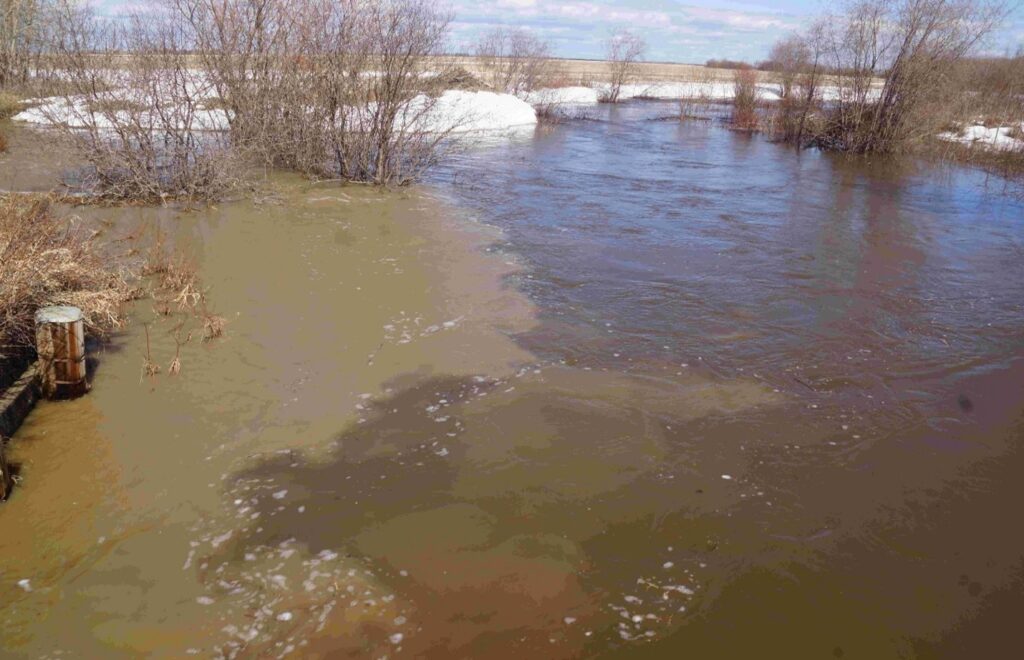
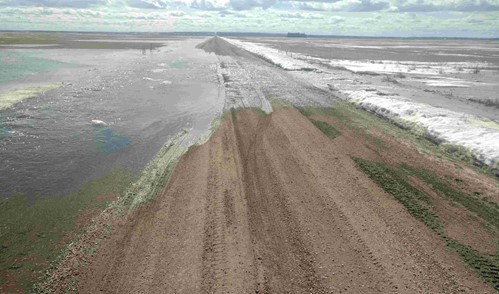
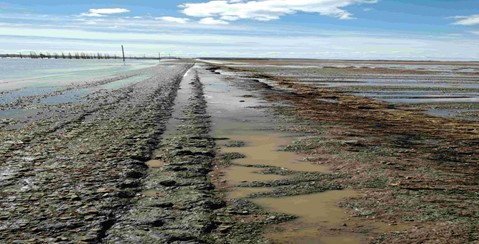
Photo credit: Norm Boulet
Recommendations
Recognizing trees as critical infrastructure components—rather than obstacles to agricultural efficiency—can help shift decision-making toward more sustainable practices. To reduce infrastructure damage and improve watershed management, the following actions are recommended:
- Encourage farmers and landowners to retain existing windbreaks(planted or naturally occurring) and fully understand their environmental and economic value before removal
- Establish new windbreaks in high-risk areas prone to snow drifting and spring flooding
- Develop incentive programs to support tree planting initiatives on agricultural land
- Enable rural planners and public works departments to identify high-risk zones for snow accumulation and ice dam formation, and implement targeted mitigation strategies
There is a clear need to assess the full impact of windbreak removal and to quantify the true costs associated with increased infrastructure repair in rural municipalities. A comprehensive, long-term approach to windbreak management will support both agricultural productivity and the sustainability of public infrastructure.