

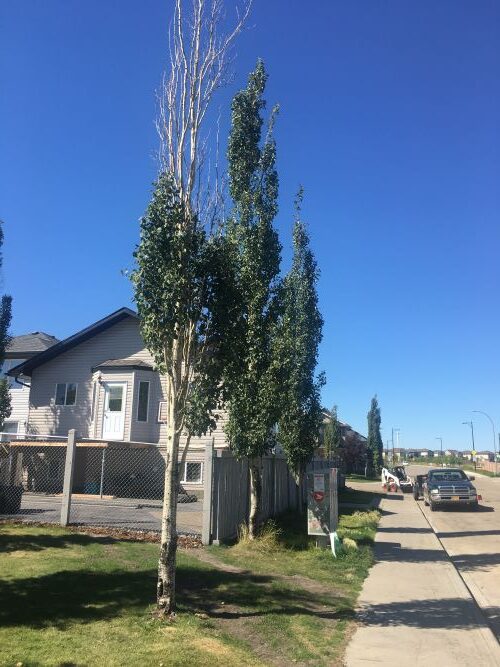
Poplar borer (Saperda calcarata Say) is a native North American wood-boring beetle that attacks native aspen, balsam poplar, and willows, as well as a variety of poplar cultivars, including Swedish aspen and Towering poplar. In many urban areas, Swedish aspen and Towering poplar have been widely planted despite their relatively short life span and susceptibility to drought and bronze leaf disease (BLD). These trees are frequently established along property boundaries, roadsides, and driveways, or in confined spaces where they serve as a “living wall” to provide privacy screening between properties.
Like other tree species, aspens and poplars are vulnerable to a range of insect pests and diseases. One of the most common insect pests affecting Swedish aspen and Towering poplar in urban environments is the native North American wood-boring beetle known as the poplar borer.
Pest ID
It is relatively easy to recognize this insect. From a short distance, you will notice the long antennas on the round head with a gray colour body that is sparkled with small brown spots on wings and several orange stripes along the elongated body. A mature insect is 2-3 cm in length with antennas that are the same size as the body. The life cycle of this tree is between 2 to 5 years. The insect attacks all age of poplar trees but prefers trees that have more than 10 cm in diameter, a size of stem or branch. They usually attack from the south to south-west side of tree. They prefer healthy and vigorous trees, but the heaviest attack on drought-stricken trees will occur.
Symptoms
There are several symptoms to recognize that trees are under the attack of this insect:
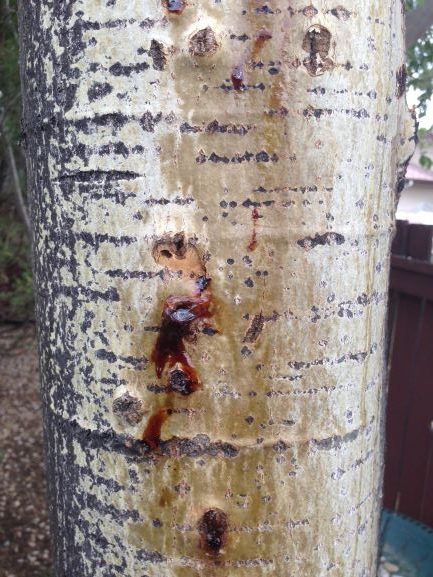
- Wet orange/brown colour oozing sap with a fine frass at an entrance hole is the best way to recognize the symptom of this insect
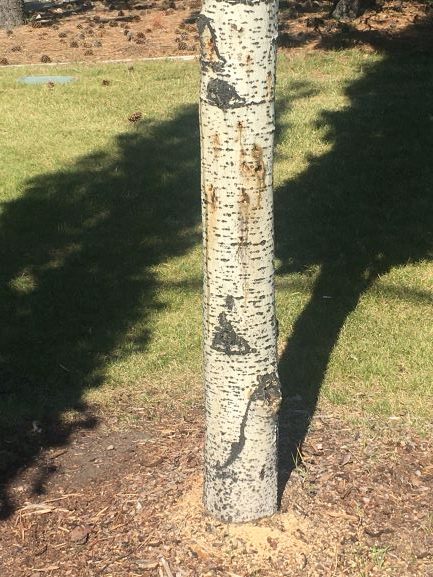
- Sawdust on the ground close to the trunk is another significant symptom
- Swollen bark area shows signs of larvae in the tree
Damage
The poplar borer usually does not kill a tree but it weakens it. Larvae is creating a tunnel in heartwood, therefore weakening the structure of the stem. With a heavy infestation, some trees will break down due to strong wind, snow, or ice at weak spots. High population of this insect can reduce growth, attract a variety of fungus that will further deteriorate the decay of the stem. Woodpeckers eating larvae will further enlarge holes and speed up the decay of the wood. It rarely kills trees
Management
Poplar borer is wood boring beetle that is difficult to control. There are several management options for the control of the poplar borer:
- Avoid planting too many Swedish aspen and Towering poplar on your property. There are several other columnar tree species that you can plant with a much longer life span and a better resistance to insects and diseases
- If you have a one tree with a heavy infestation – remove it and burn it
- Many native insect predators and enemies of this insect will keep this species in checks, but you must encourage the diversity of trees and shrubs species in your property
- There are a very few chemical and biological products to successfully control this insect
How Can We Help?
Our professional and experienced Tree Expert and ISA Certified Arborist offers a full range of consulting and advisory services to help you out. Hire Yard Whispers Arborists or our parent company ATTS Group to inspecting your tree and recommending a solution that’ll meet its specific needs